


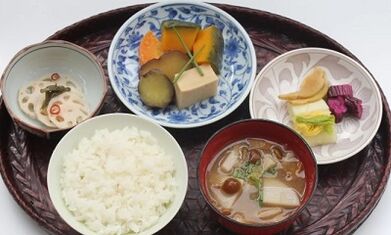
The Japanese diet for 14 days is one of the weight loss schemes developed by specialists in a Japanese clinic.It contains a short list of products, has a simple menu and an effective technique that is easy to perform at home.
A strict diet for every day requires the fulfillment of several conditions: disciplined eating, exclusion of forbidden foods and regular heavy drinking.
The duration of the diet is 13 or 14 days.The popularity of the Japanese diet is explained by its excellent results and long-term effect: in 2 weeks, with the right approach, you can lose up to 10 kilograms of excess weight.
Japanese diet for 14 days: the principle of weight loss
The whole essence of the Japanese diet can be expressed in a few words: low-calorie, high-protein, with a minimum amount of salt.Accordingly, thanks to these three foundations, the weight loss process begins:
- Protein is able to improve heat production, which accelerates metabolism, promoting weight loss;
- Due to the restriction of salt in the diet, excess fluid is removed from the tissues, edema is eliminated and blood pressure is normalized;
- A minimal amount of calories enters the body.Therefore, he must activate his own reserves;
- A lot of energy is spent on the digestion of protein products, which leads to the burning of fat layers.
The diet is suitable for people of any weight category.If you need to lose 4-5 kg, it will be enough to sit on it for a week.If everything is 10 kg, then the 14-day option will come to the rescue.
If there are no contraindications and you feel well, you can extend it for a month, since in addition to proteins it still contains fat (vegetable oil) and carbohydrates (rice).
Europeans have about 30 different products on their table in a week.The Japanese believe that the diet should be more varied: their weekly menu numbers more than 100.
Japanese diet for 14 days - briefly about the main thing
The most effective diet for rapid weight loss is the Japanese diet.Only the Dukan diet can compete with it, but they have a difference in duration: if the Japanese diet lasts only two weeks, then the Dukan diet will last months when all its stages are completed.
- Features: low-calorie protein diet, strict, requires prior psychological attitude;
- Price: low;
- Duration: 14 days;
- Recommended frequency: no more than 2 times a year;
- Result of the Japanese diet: minus 5-10 kg;
- Additional effect: long-term preservation of the result (with proper exit from the diet).
The Japanese diet is not suitable for pregnant women, nursing mothers, gastritis and ulcers, as well as for people with liver and kidney diseases and heart diseases.Before starting a diet, you should consult your doctor!
Japanese diet for 14 days: basic principles of dietary nutrition
The Japanese diet was developed about 15 years ago, and during that time many people who wanted to lose weight appreciated its effectiveness.The Japanese diet suggests a salt-free diet with a significant reduction in carbohydrates.
The main rules for implementing the diet are:
- It is necessary to monitor the consumption of large amounts of clean water;
- Fish can be eaten not only cooked;
- There are no restrictions on the use of cereals, in most cases rice, legumes;
- It is allowed to eat cabbage and other vegetables;
- For 14 days it is strictly forbidden to consume simple carbohydrates;
- When preparing meals, you should use only recommended products;
- It is acceptable to drink morning coffee without sugar;
- It is forbidden to change the days of the diet: on the fifth day you should eat only those dishes that are prescribed for that day;
- In the preparation of dishes, beef remains a priority, although it is acceptable to use skinless chicken.
"Japanese" is based on reducing daily calories and giving up carbohydrates, especially fast ones.Dietary nutrition includes giving up salt, fatty and smoked foods.Alcohol, juices, carbonated drinks and any fast food are contraindicated.
Strict adherence to these tips leads to an acceleration of metabolism, as a result of which excess fat deposits are burned and processed into energy.The Japanese diet belongs to the protein class.The basis of the diet is chicken eggs, rabbit and chicken meat, fish and some dairy products.
From carbohydrates, it is allowed to eat only some vegetables in small quantities.A prerequisite is the normalization of the water balance;in addition to the fact that those losing weight should drink at least 2 liters of pure water, the menu should include green tea, coffee or chicory.
Basic principles of proper nutrition:
- Individual choice of Japanese diet: for 7 and 14 days.If you are slightly overweight, it is enough to stick to the diet for 7 days.In case of serious excess, you must follow the Japanese diet for 14 days;reviews show that in the first case the weight loss will be about 6 kg, in the second - up to 10 kg;
- Strict adherence to the diet - the proposed products cannot be replaced with alternative ones.You can only use tomato juice instead of tomatoes, white cabbage instead of spinach;
- No sugar - all sweet foods, bakery and flour products, honey are strictly prohibited;
- Stepping in and out of the Japanese diet.The results are less noticeable in those who switch to this diet from another diet.And they are clearly visible if the previous feeding was not dietary.If you eat a full meal on the eve of the Japanese meal, you should organize a day of fasting (kefir or apple) or at least make a light dinner (slightly boiled brown rice with a salad of fresh vegetables).When leaving, you should introduce the daily foods gradually, about 1 per week;
- Lack of salt - the Japanese diet without salt is aimed at removing excess fluid from the body, due to which up to 30% of excess weight is lost;
- Prohibition of exceeding deadlines.It is impossible to continue dietary nutrition for more than 14 days due to danger to the body;
- Sufficient volume of liquid - during the day you should drink 2 liters of still water.Tea (you can drink green) and coffee are not included in this volume;
- Strict adherence to consistency - the Japanese diet, whose menu was developed with the aim of gradual weight loss and long-term preservation of the result, does not tolerate changes in the proposed diet.You cannot rearrange the days and menus for breakfast, lunch and dinner.
Pros and cons of the Japanese diet for 14 days
Benefits of the Japanese Diet:
- The risk of cardiovascular diseases is reduced (also due to the reduction of salt in food);
- Permanent results when properly exiting the diet (you will not return the lost pounds);
- Availability of the products indicated in the menu - without exotics;
- Minimal salt consumption reduces swelling;
- Protein products will prevent sagging and stretch marks after weight loss;
- You can use different methods of preparing dishes: not only steamed, stewed or boiled - you can even fry them without excluding vegetable oil from the diet;
- Plant food will provide the body with the necessary vitamins and trace elements;
- Significant weight loss.
Disadvantages of the Japanese Diet:
- Three meals a day without snacks does not meet the principles of healthy weight loss when meals are prescribed 5-6 times a day;
- Many contraindications;
- The frequency of using the diet is only once every six months;
- The average daily calorie intake is only 800 kcal, which is harmful for those who are used to physical and mental activity;
- Possible dehydration;
- Every morning you have to start with a cup of black coffee on an empty stomach, which not every heart and stomach can bear;
- The wrong way out of the diet is fraught with rapid weight gain;
- Therefore, by the end of the hunger strike, many begin to experience dizziness, reduced work capacity, drowsiness and weakness.
Shopping list for the Japanese diet for 14 days
- Fresh chicken eggs - 2 dozen;
- Chicken fillet - 1 kg;
- Fresh carrots - 2-3 kg;
- Tomato juice - 1 l.;
- First-class coffee beans or ground - 1 package;
- White cabbage - 2 medium-sized forks;
- Fruits (except bananas and grapes) - 1 kg.general;
- Selected lemons - 2 pcs.;
- sea fish fillet - 2 kg;
- Zucchini, eggplant - 1 kg.general;
- Kefir - 1 liter (buy fresh, do not store for future use!);
- Lean beef, pulp - 1 kg;
- Extra virgin olive oil - 500 ml;
- Green tea of your favorite variety (without additives and flavorings) - 1 pack.
Forbidden foods for the Japanese diet
In the Japanese diet, you cannot eat foods such as:
- Alcohol and any carbonated water;
- Baked goods made from white flour;
- Semi-finished products and instant meals;
- confectionery;
- salt;
- fatty meats and fish;
- Bananas, grapes, persimmons;
- sugar;
- Starchy vegetables;
- Sauces, condiments and other condiments;
- honey
Japanese salt-free diet for 14 days: a list of allowed foods
Dishes consisting of fish or animal meat with a side dish of vegetables are quite popular and many people eat them every day.It is psychologically difficult for people to give up spices, especially salt, as well as various sweets in the form of pastries, confectionery and sweets.
Forcing yourself to forget about treats for a week or two is a problem.Maybe it's worth "cleansing" your body by temporarily switching to proper nutrition without salt?
Allowed products for weight loss in the "Japanese" diet:
- Brown bread crumbs;
- Kefir or yogurt, preferably homemade natural;
- It is recommended to consume tomato juice, homemade or purchased with pulp.Regular packaged juice contains salt, which is prohibited;
- Hard low-fat cheese;
- Natural coffee;
- Sea fish, beef, chicken, boiled or steamed;
- Chicken or quail eggs, raw or boiled (hard-boiled);
- Zucchini, eggplant, parsnip root, fried in oil;
- Unsweetened fruits, most often apples, pears, citrus fruits;
- Green tea without additives and flavorings;
- Mineral or purified water without gas;
- Lemon, the juice of which can be added to dishes to improve the taste;
- Vegetable oil - olive or unrefined sunflower oil;
- Fruits: cherries, apples, kiwis, citrus fruits, pears, plums;
- Fresh vegetables: cabbage and carrots, raw and cooked.You can eat whole, in pieces, cut or grated.
Products and spices not included in this list are considered prohibited.Fruits such as grapes and bananas are also prohibited.
Japanese diet for 14 days: full menu
Japanese diet 14 days menu for every day and the scheme is currently popular in Russia.It attracts people due to its low price, while the duration of the diet is only two weeks.
A noticeable result after some time, which is preserved even after the diet is properly stopped.Alas, to overcome the two-week diet you will have to go through real samurai tests.
first day
- Breakfast: coffee without sugar and milk;
- Lunch: 2 boiled eggs, boiled cabbage with vegetable oil and a glass of tomato juice;
- Dinner: 200 g of boiled or fried fish.
Second day
- Breakfast: a piece of rye bread and coffee without sugar;
- Lunch: 200 g of boiled or fried fish with boiled cabbage and vegetable oil;
- Dinner: 100 g of boiled beef and a glass of kefir.
Third day
- Breakfast: a piece of rye bread, toasted in a toaster, or unleavened biscuits without additives, coffee without sugar;
- Lunch: zucchini or eggplant, fried in vegetable oil, in any quantity;
- Dinner: 200 g of unsalted boiled beef, raw cabbage in vegetable oil and 2 boiled eggs.
Fourth day
- Breakfast: a small fresh carrot with the juice of one lemon;
- Lunch: 200 g of boiled or fried fish and a glass of tomato juice;
- Dinner: 200 g of any fruit.
Fifth day
- Breakfast: a small fresh carrot with the juice of one lemon;
- Lunch: boiled fish and a glass of tomato juice;
- Dinner: 200 g of any fruit.
Sixth day
- Breakfast: coffee without sugar;
- Lunch: unsalted boiled chicken 500 g with a salad of fresh cabbage and carrots in vegetable oil;
- Dinner: small fresh carrots and 2 boiled eggs.
Seventh day
- Breakfast: green tea;
- Lunch: 200 g of unsalted boiled beef;
- Dinner: 200 g of fruit or 200 g of boiled or fried fish or 2 eggs with fresh carrots in vegetable oil or boiled beef and 1 cup of kefir.
Eighth day
- Breakfast: coffee without sugar;
- Lunch: 500 g of boiled chicken without salt and carrot and cabbage salad in vegetable oil;
- Dinner: fresh small carrots with vegetable oil and 2 boiled eggs.
Ninth day
- Breakfast: medium carrot with lemon juice;
- Lunch: 200 g of boiled or fried fish and a glass of tomato juice;
- Dinner: 200 g of any fruit.
Tenth day
- Breakfast: coffee without sugar;
- Lunch: 50 g of cheese, 3 small carrots in vegetable oil and 1 boiled egg;
- Dinner: 200 g of any fruit.
Eleventh day
- Breakfast: coffee without sugar and a piece of rye bread;
- Lunch: zucchini or eggplant, fried in vegetable oil, in any quantity;
- Dinner: 200 g of boiled beef without salt, 2 boiled eggs and fresh cabbage in vegetable oil.
Twelfth day
- Breakfast: coffee without sugar and a piece of rye bread;
- Lunch: 200 g of boiled or fried fish with fresh cabbage in vegetable oil;
- Dinner: 100 g of boiled unsalted beef and a glass of kefir.
Thirteenth day
- Breakfast: coffee without sugar;
- Lunch: 2 boiled eggs, boiled cabbage in vegetable oil and a glass of tomato juice;
- Dinner: 200 g of boiled or fried fish in vegetable oil.
Fourteenth day
- Breakfast: coffee without sugar;
- Lunch: boiled or fried fish 200 g, fresh cabbage with olive oil;
- Dinner: 200 g of boiled beef, a glass of kefir.
Japanese diet 14 days
On the Internet, you can find several options of the menu of the Japanese diet for 14 days, each of which is described in detail for the day.One of them includes the following types of breakfasts, lunches and dinners for each day (14 days):
Day 1
- Breakfast: black coffee.
- Lunch: 2 boiled eggs, 200 g of boiled cabbage + 1 teaspoon of oil, 200 ml of tomato juice.
- Dinner: 200 g boiled or baked hake.
Day 2
- Breakfast: 20 g of rye bread, black coffee.
- Lunch: 200 g of boiled pollock, 150 g of boiled cabbage + 1 teaspoon of vegetable oil.
- Dinner: 100 g of boiled beef, 200 ml of kefir (2.5% fat).
Day 3
- Breakfast: 20 g of rye bread, black coffee.
- Lunch: 1 medium zucchini fried in vegetable oil.
- Dinner: 200 g of boiled beef, 2 boiled eggs, 150 g of fresh cabbage + 1 teaspoon of vegetable oil.
Day 4
- Breakfast: 1 fresh carrot, black coffee.
- Lunch: 200 g of boiled pollock, 200 ml of tomato juice.
- Dinner: 200 g of any fruit.
Day 5
- Breakfast: 1 fresh carrot, juice of one lemon (can be diluted with water).
- Lunch: 200 g boiled hake, 200 ml tomato juice.
- Dinner: 200 g of any fruit.
Day 6
- Breakfast: black coffee.
- Lunch: 300 g of boiled chicken breast, 200 g of salad (fresh cabbage + carrots + 1 teaspoon of vegetable oil).
- Dinner: 2 boiled eggs, 1 fresh carrot.
Day 7
- Breakfast: green tea.
- Lunch: 200 g of boiled beef, 2 apples.
- Dinner: any of the previous options, except for the 3rd day.
Day 8
- Breakfast: black coffee.
- Lunch: 300 g of boiled chicken breast, 150 g of salad (cabbage + carrots + 1 teaspoon of vegetable oil).
- Dinner: 2 boiled eggs, 1 fresh carrot + 1 teaspoon of oil.
Day 9
- Breakfast: 1 fresh carrot, juice of one lemon.
- Lunch: 200 g boiled hake, 200 ml tomato juice.
- Dinner: 200 g of any fruit.
Day 10
- Breakfast: black coffee.
- Lunch: 50 g of hard cheese, 100 g of grated carrots + 1 teaspoon of vegetable oil, 1 boiled egg.
- Dinner: 200 g of any fruit.
Day 11
- Breakfast: 20 g of rye bread, black coffee.
- Lunch: 1 medium zucchini fried in vegetable oil.
- Dinner: 200 g of boiled beef, 2 boiled eggs, 150 g of fresh cabbage + 1 teaspoon of vegetable oil.
Day 12
- Breakfast: 20 g of rye bread, black coffee.
- Lunch: 200 g of boiled pollock, 150 g of fresh cabbage + 1 teaspoon of vegetable oil.
- Dinner: 100 g of boiled beef, 200 ml of kefir.
Day 13
- Breakfast: black coffee.
- Lunch: 2 boiled eggs, 200 g of boiled cabbage + 1 teaspoon of oil, 200 ml of tomato juice.
- Dinner: 200 g of boiled or baked pollock + 1 teaspoon of vegetable oil.
Day 14
- Breakfast: black coffee.
- Lunch: 200 g of boiled or baked hake, 150 g of fresh cabbage + 1 teaspoon of olive oil.
- Dinner: 200 g of boiled beef, 200 ml of kefir.
Giving up the Japanese diet
The first week of leaving the Japanese diet is an extremely important period.At this time, the body continues to lose weight and adapt to new parameters, so it is important not to rush on food, but to slowly introduce familiar foods into the diet.They should be extremely natural.
In order to consolidate the achieved result, you should gradually exit the diet.The exit period should last twice as long.So, the period of exit from the 14-day Japanese diet should last no less than 28 days - that is, 4 weeks:
- Eat small portions (5-6 times a day);
- For breakfast, eat porridge cooked in water (buckwheat, oatmeal, rice) and omelets.Your single serving should be around 200g;
- Replace the fruit dinner with a full meal of vegetables and proteins (for example, 200 g of vegetable stew and a steamed chicken cutlet);
- You should gradually add salt to your food: at the beginning of the trip, consume no more than 5 g of salt per day;
- Do not reduce the amount of protein foods;
- During the day, you should make 2-3 snacks of fermented milk products and fruits;
- During the first week, gradually increase the consumed portions of meat and fish dishes - by 50 g, vegetables - by 100 g.
Approximate menu for exiting the Japanese diet for 2 weeks:
Day 1-3
- Breakfast: omelet of 2 eggs and 150 ml.milk (2.5% fat), 1 loaf, black coffee;
- Lunch: 200 g of boiled beef or 200 g of baked cod, 100 g of fresh vegetables;
- Dinner: 100 g of cottage cheese (5% fat) or 250 ml.kefir (2.5% fat) and 1 apple.
Day 4-6
- Breakfast: 200 g of oatmeal with water (without sugar and butter);
- Snack: 1 orange, 1 kiwi;
- Lunch: 200 g of roasted chicken breast, 100 g of fresh vegetables (cabbage, carrots, pepper);
- Dinner: 200 g of boiled shrimp or 150 g of cottage cheese (7% fat), 1 cucumber.
Day 7-10
- Breakfast: 200 g of oatmeal in water without sugar and butter, 2 pieces of toast (20 g each);
- Snack: 1 fruit;
- Lunch: 200 g of vegetable soup, 100 g of boiled beef;
- Snack: 100 g of natural yogurt;
- Dinner: 200 g of roasted chicken breast, 150 g of steamed vegetables.
Day 11-14
- Breakfast: 200 g of porridge with nuts, dried fruits and honey (no more than 1 teaspoon), 2 pieces of toast (20 g each);
- Snack: 1 fruit, 100 g of natural yogurt or cottage cheese (5% fat content);
- Lunch: 200 g of any soup with low-fat chicken broth, 150 g of boiled chicken breast, 2 fresh cucumbers;
- Snack: 1 fruit or 150 g of natural yogurt;
- Dinner: 200 g of boiled mussels, 150 g of vegetable stew;
- Snack: 200 ml.kefir (2.5% fat).
Samurai rules of the Japanese diet
Basic recommendations for following the Japanese weight loss method:
- Follow the menu strictly, do not change the products.Do not minimize the number of ingredients specified in the menu and avoid interruptions and deviations from it;
- Smoothly get out of the restricted diet, try not to immediately return to harmful foods;
- While losing weight, drink enough pure water without gas at room temperature.Water will give you a feeling of satiety and ensure the removal of toxins and harmful substances;
- Eat no later than two hours before going to bed;
- After waking up from sleep on an empty stomach, drink 200 ml.water to improve metabolism;
- If most of the permitted foods do not appeal to you, abstain from the diet;
- If you experience weakness, migraines or body aches, stop following this diet immediately.
3 popular Japanese diet recipes
To make the diet as easy as possible, we suggest you adopt a few recipes that will allow you to endure this weight loss marathon to the bitter end.Remember to avoid salt completely.
Recipe 1. Baked fish
This dish is suitable for any diet.
ingredients:
- Cod fillet - 300 g;
- Zucchini - 100 g;
- Soy sauce - 50 ml.
Cooking method:
- Cut the fillet into fairly large pieces;
- Marinate in sauce for 3 hours;
- Cut the zucchini into slices.Leave for half an hour, squeeze the juice;
- Place the fish in the sleeve, and the courgettes on top of it;
- Pour the remaining marinade;
- Tie the sleeve, make several holes in it;
- Bake for half an hour in an oven preheated to 180°C.Bon appetit!
Recipe 2. Boiled cabbage salad
This dish is one of the staples of the Japanese diet.
ingredients:
- White cabbage - 200 g;
- Canned green peas - 30 g;
- Vegetable oil - 30 ml;
- Parsley - to taste;
- Dill - to taste.
Cooking method:
- Boil the cabbage leaves until soft (30 minutes);
- Cool them;
- Cut into thin strips;
- Stir in the butter, peas and chopped herbs.Bon appetit!
Recipe 3. Diet soup
The recipe is perfect for unsalted or rice versions.
ingredients:
- Pollock fillet - 300 g;
- Water - 1.5 l.;
- Egg - 1 pc.;
- Onion - 1 pc.;
- Sea cabbage - 150 g;
- Soy sauce - 50 ml;
- rice - 100g.
Cooking method:
- The onion is cut and marinated in the sauce for 3 hours;
- Boil the rice until half done, add fish cut into pieces and cook until done;
- Chop the seaweed and add to the soup;
- Put the pickled onions in the same place, but without the marinade;
- Slowly pour the beaten egg into the soup in a thin stream, stirring constantly;
- Immediately remove from heat;
- It can be served both cold and warm.Bon appetit!
Japanese dinner.In the evening, Japanese can eat dishes such as rice with furikake (dried mixture), seaweed, red fish, miso soup, salad, steamed vegetables and green tea.
Japanese diet: contraindications
The Japanese method is intended for people without health problems.If you have serious diseases, it is better to give up the idea of "calm down" on a strict diet.
We list the main contraindications:
- Inflammatory processes;
- Stomach diseases (gastritis, ulcer);
- breastfeeding;
- Kidney failure;
- cholecystitis;
- Viral infections;
- hepatitis;
- Gallstone disease;
- Excessive stress - emotional, mental, physical;
- AIDS;
- Hypertension;
- Chronic diseases;
- neuralgia;
- diabetes mellitus;
- Climax;
- Age up to 18 years and after 55 years;
- obesity.The Japanese diet for weight loss is recommended for healthy people to correct their shape and get rid of a few extra pounds.Obesity is a disease, and people with this problem are strictly forbidden to make drastic changes in their diet on their own.Possible negative consequences: metabolic disorders, sharp increase in body weight.Any diet for obese patients is prescribed by the attending physician.
If side effects such as dizziness, tachycardia, stomach pain, dry lips and skin begin to appear, this may mean dehydration and disruption of its functioning.You will have to stop the diet and be sure to consult a doctor to avoid complications.
Is it worth following the Japanese diet?Everyone will have to answer this question for themselves.Rave reviews on the Internet can suggest a solution, but do not forget about the individual characteristics of the body.
Rapid weight loss and the ability to maintain weight subsequently is a complex of measures, strict discipline and compliance with the correct regime.Be beautiful and healthy!Good luck!